Korea’s Leveraged Chip ETFs: Its Regulator Said Sorry
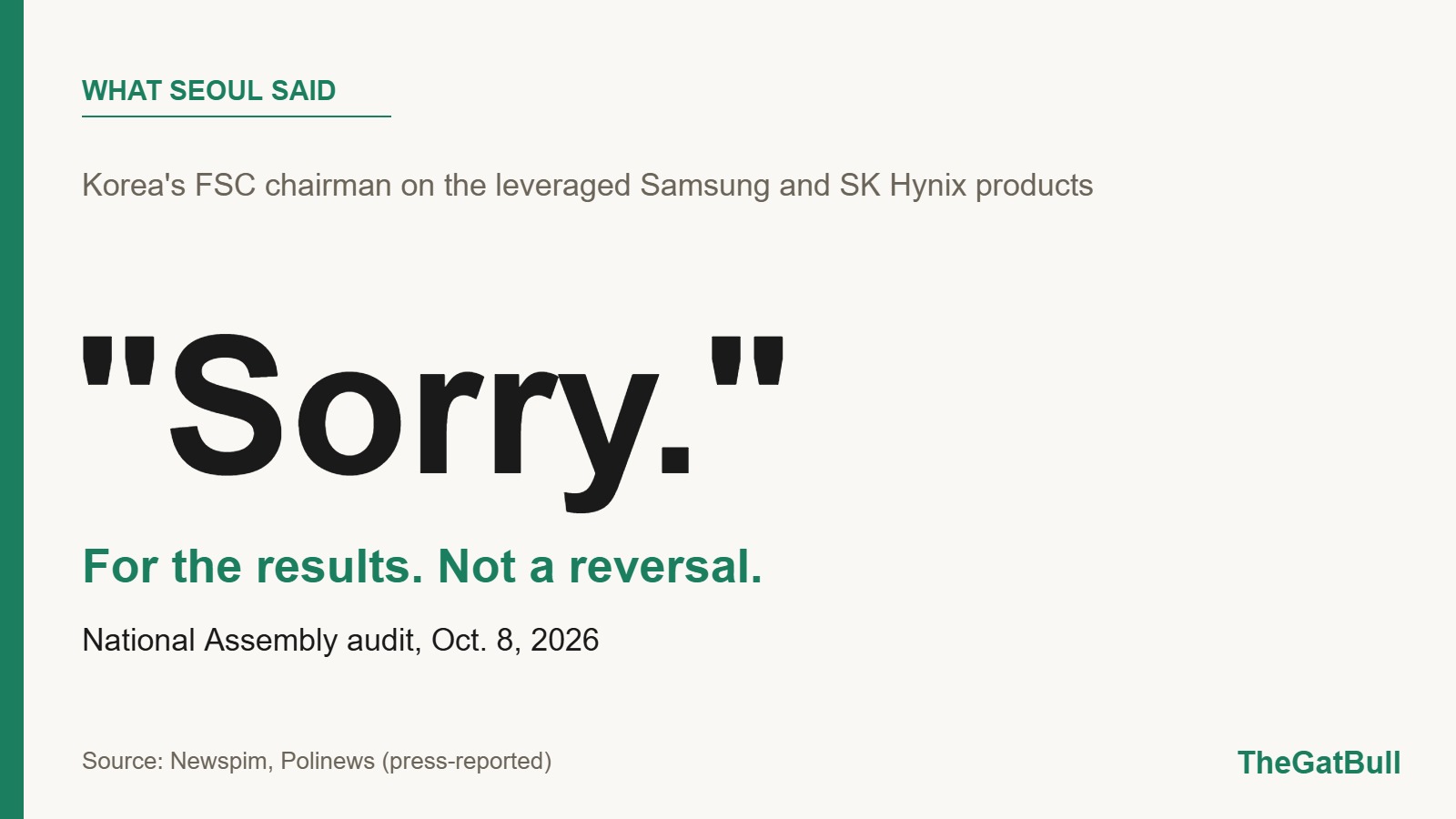
Korea’s financial regulator chief apologized for losses on leveraged Samsung and SK Hynix products. What was said, what is disputed, and what it means for EWY.
Korea’s financial regulator chief apologized for losses on leveraged Samsung and SK Hynix products. What was said, what is disputed, and what it means for EWY.
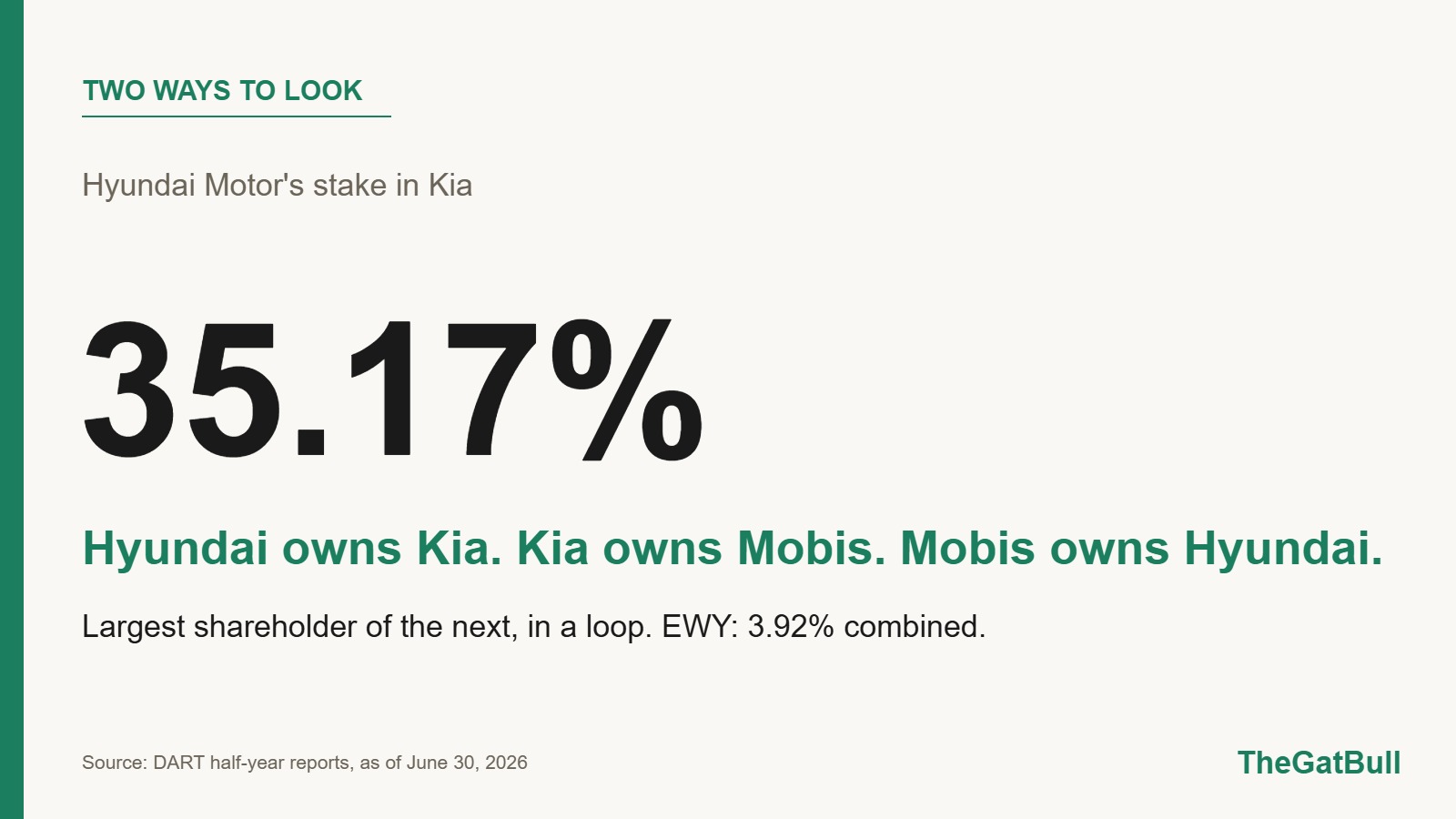
Hyundai owns 35.17% of Kia, Kia owns 18.10% of Mobis, and Mobis owns 22.36% of Hyundai. What that loop means if you hold EWY.
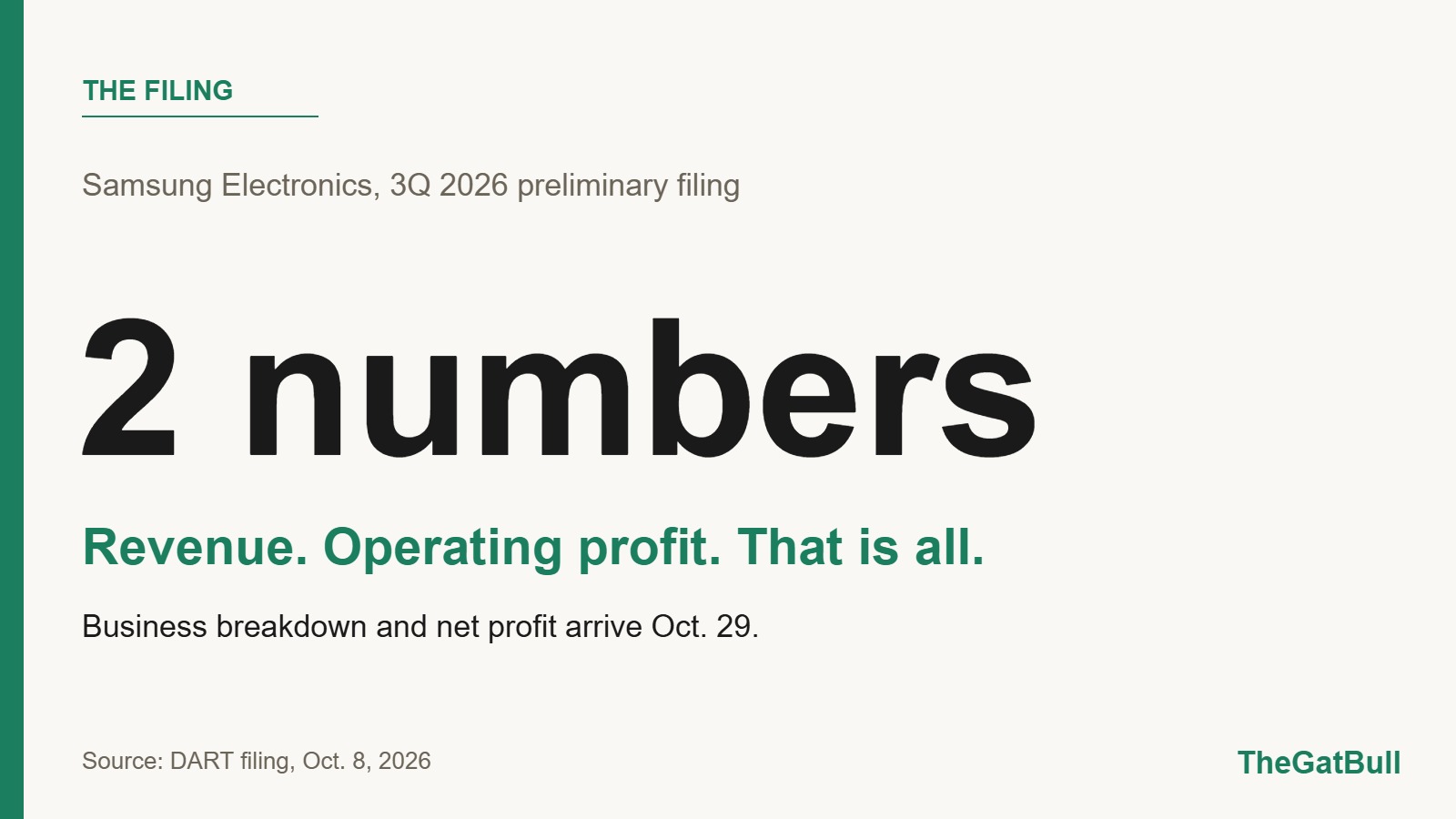
Samsung reported Q3 operating profit of ₩107.4 trillion (about $80 billion) in a filing with just two numbers. The business breakdown comes Oct. 29.
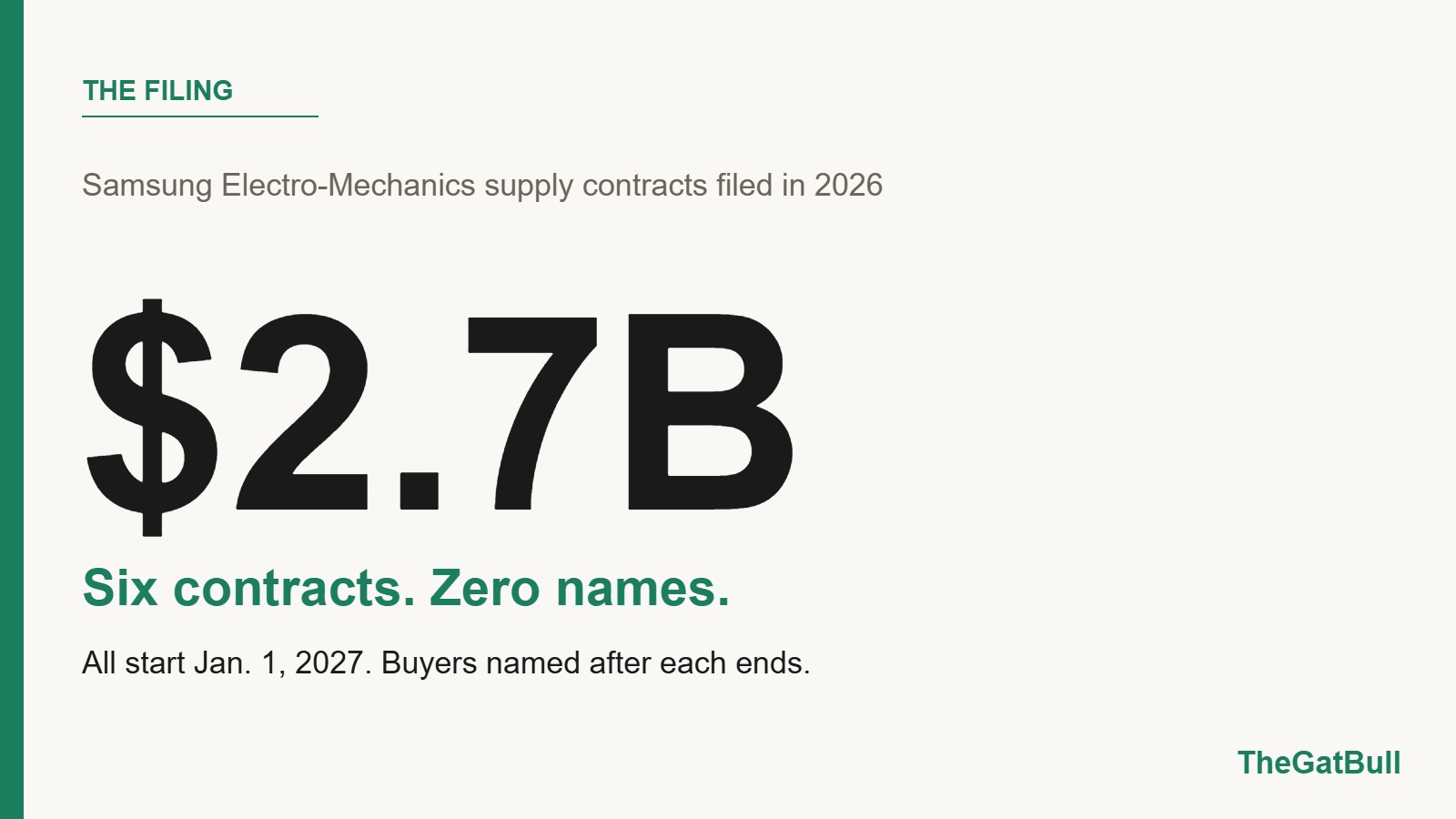
Samsung Electro-Mechanics filed six supply contracts worth about $2.73 billion in 2026. All start in 2027, and none of the filings names the buyer.
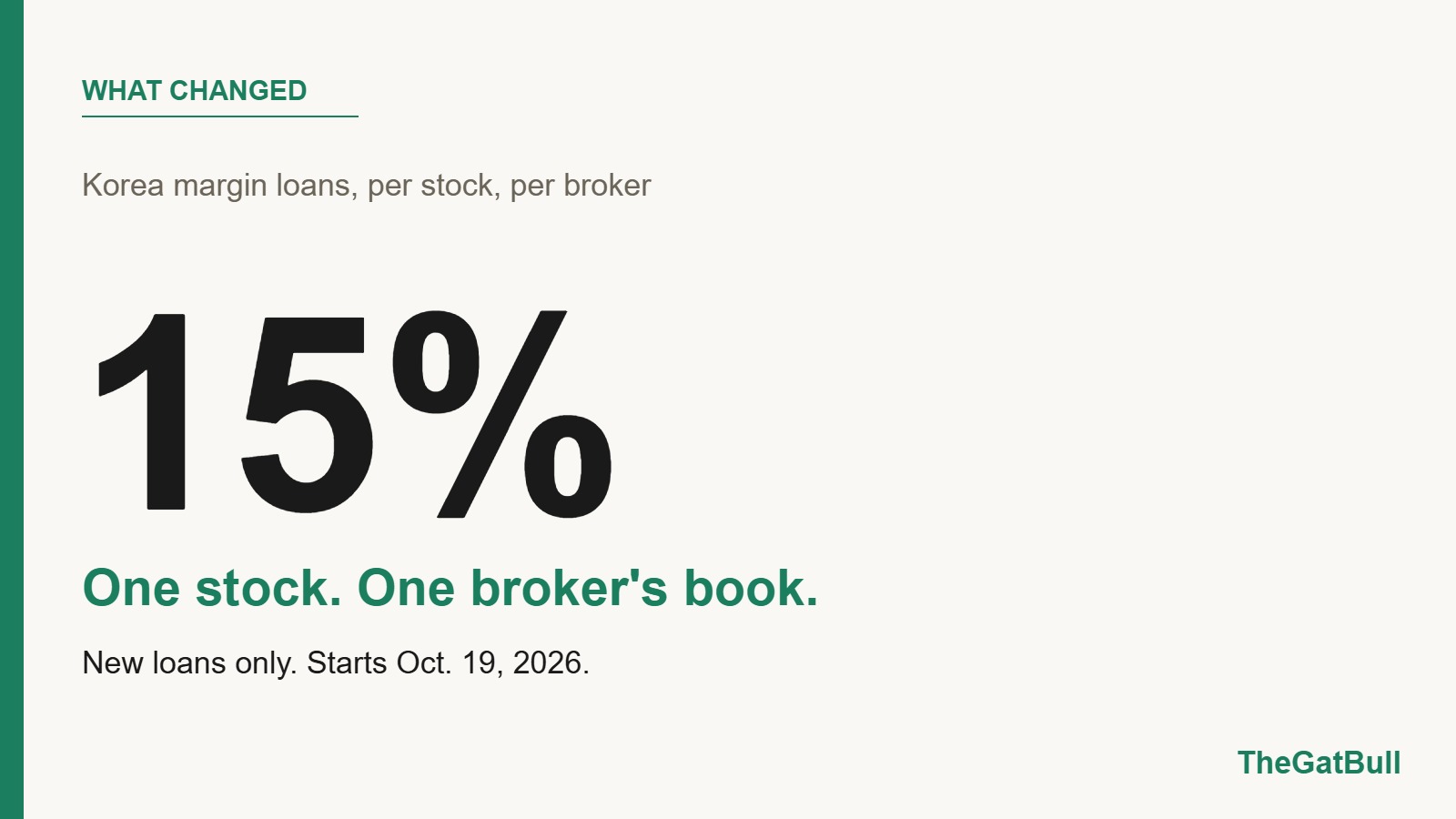
From Oct. 19, Korean brokers will add limits on new margin loans in any stock above 15% of their margin book. Samsung and SK hynix sit just under that line.
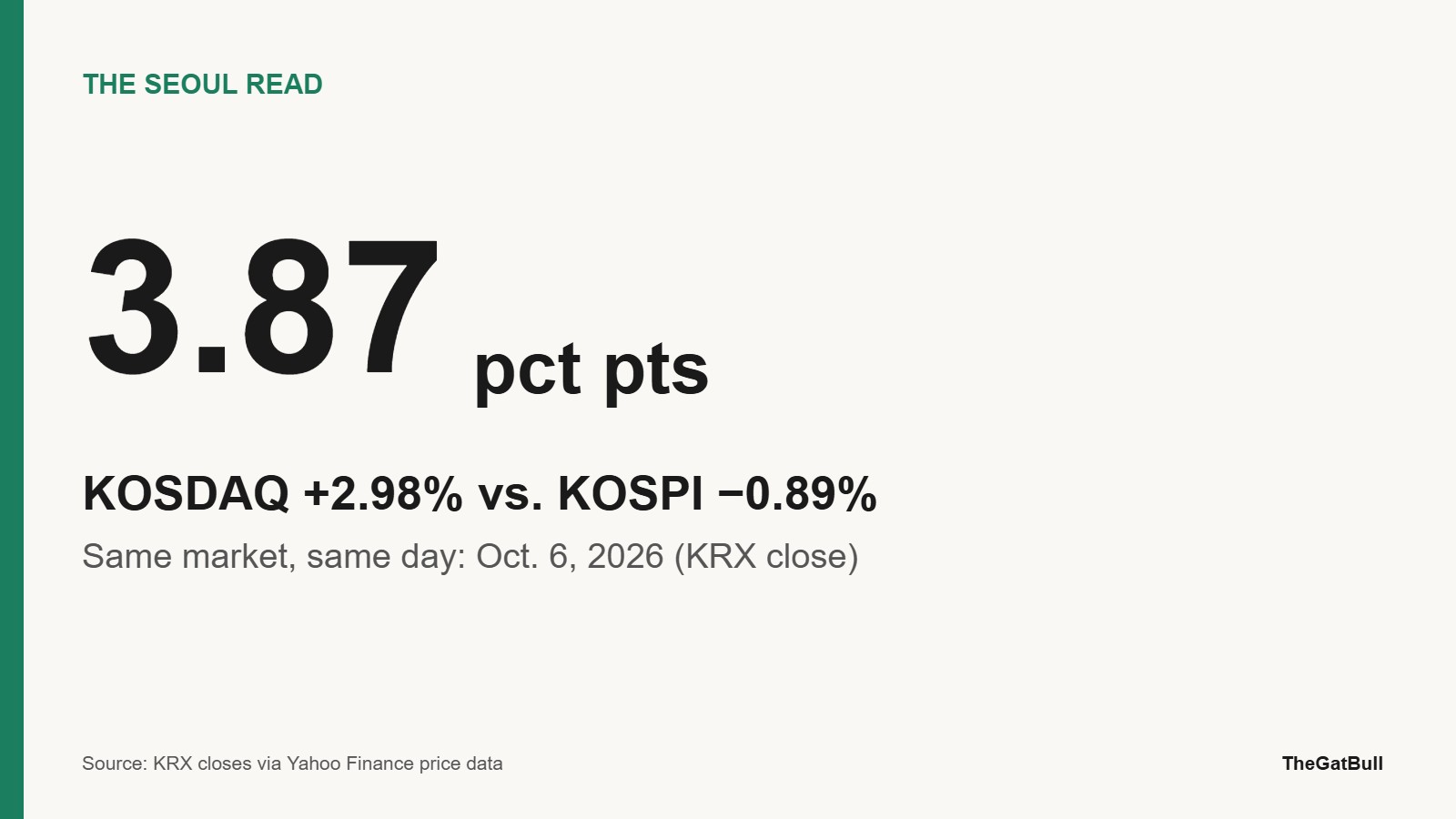
Seoul reopened higher after a three-day break, then Samsung and SK hynix fell. KOSPI lost 0.89%; KOSDAQ rose 2.98%, its first close above 900 since July.
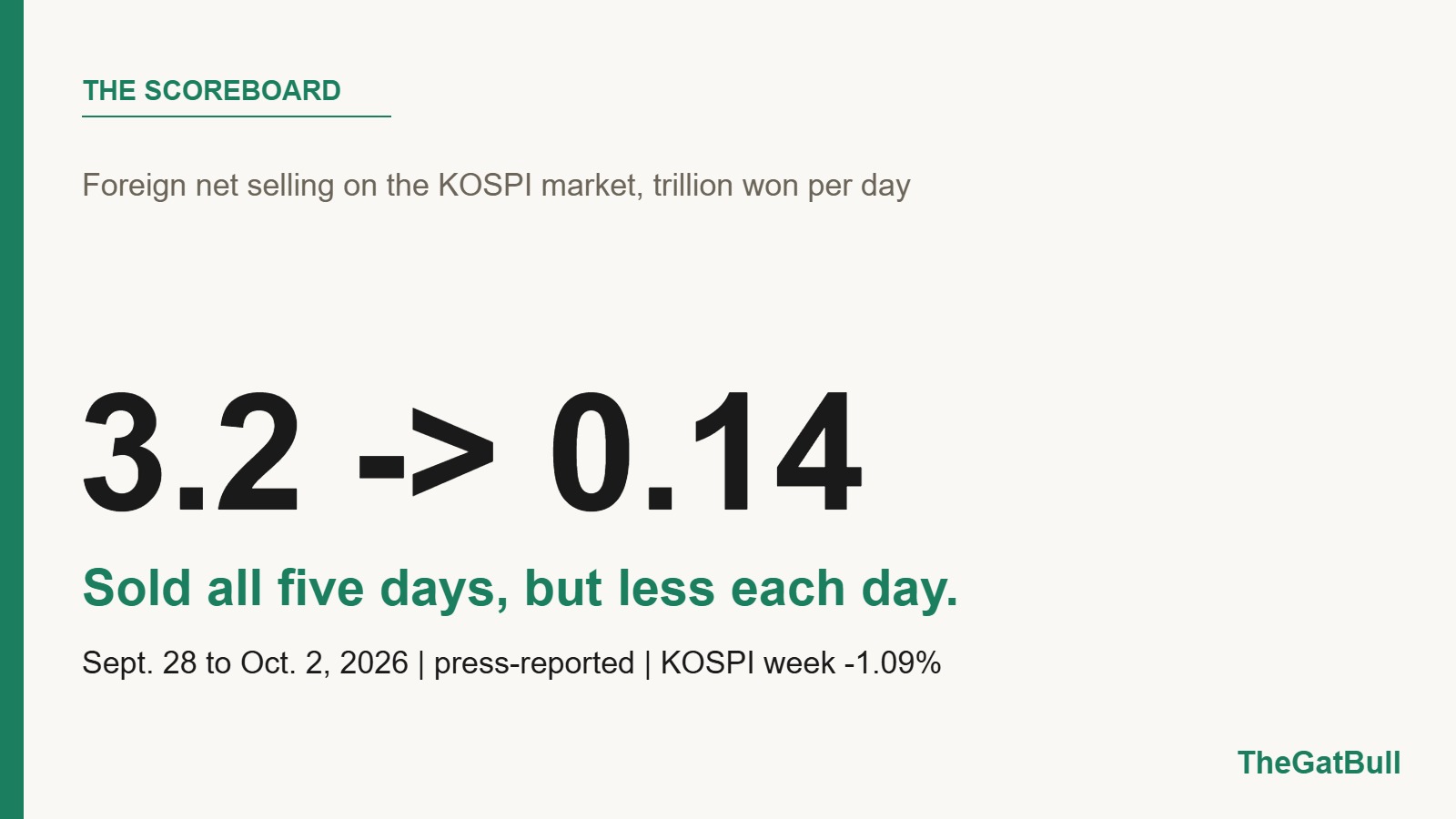
Korea’s first week after Chuseok: foreigners net sold all five sessions, but daily selling fell from ₩3.2T to ₩0.14T. KOSPI ended −1.09%, KOSDAQ +5.78%.
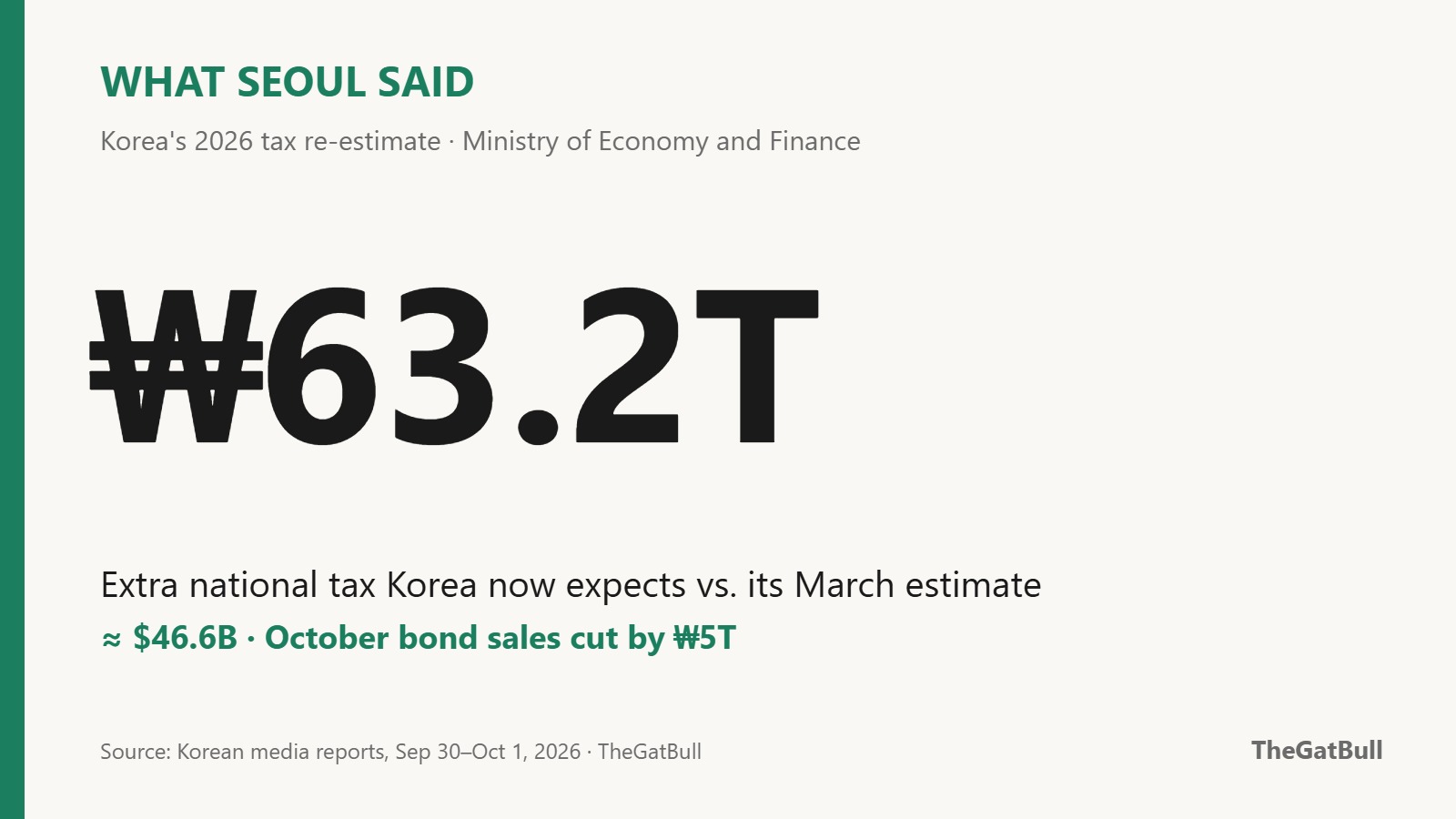
Korea now expects ₩63.2 trillion more tax than planned, led by chip-era corporate tax, and cut October bond sales by ₩5 trillion. Too early to judge.
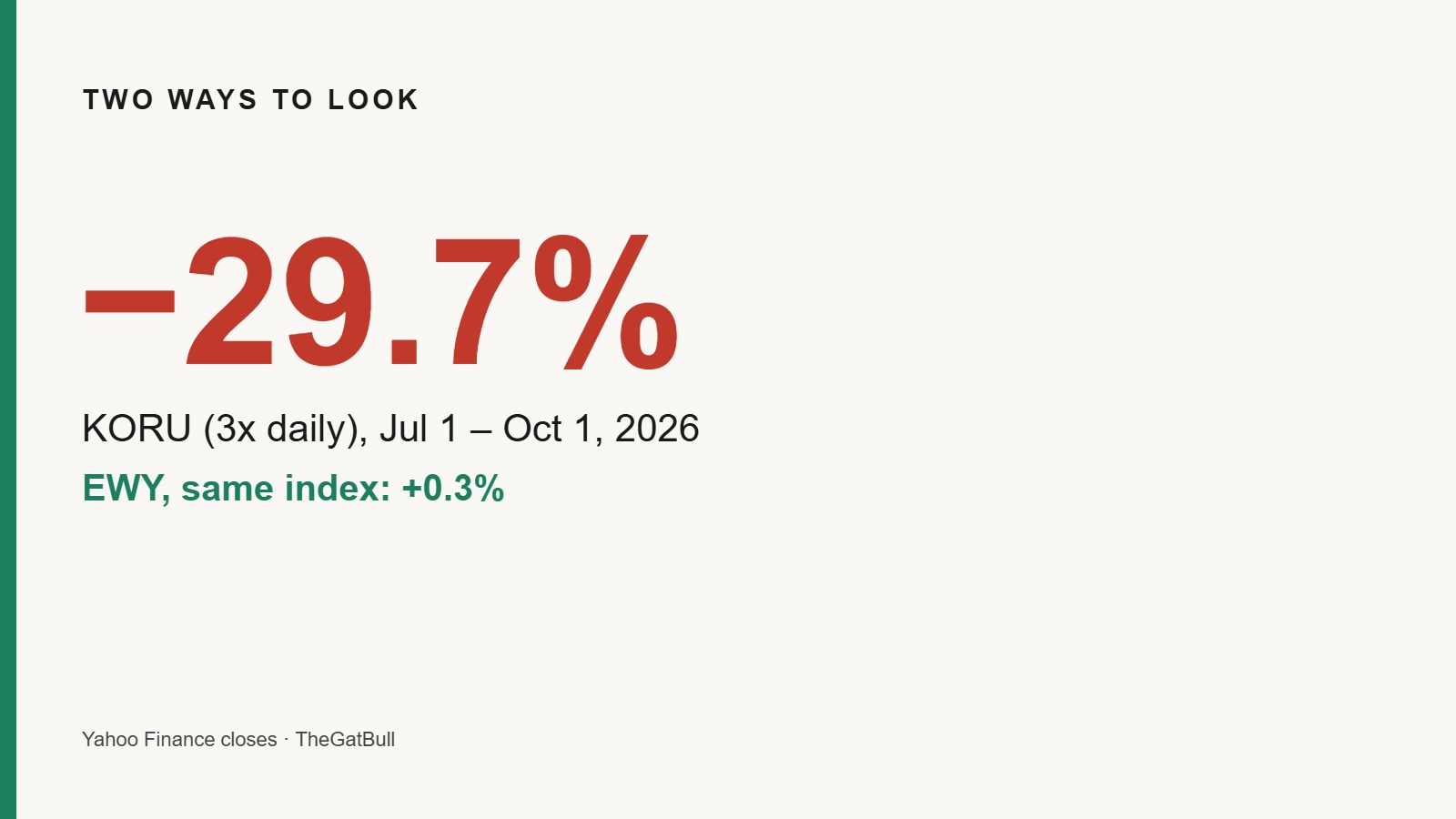
KORU, the 3x Korea ETF, fell 29.7% from July 1 to Oct. 1 while EWY rose 0.3%. Same MSCI index, different clocks: what daily reset does to it.
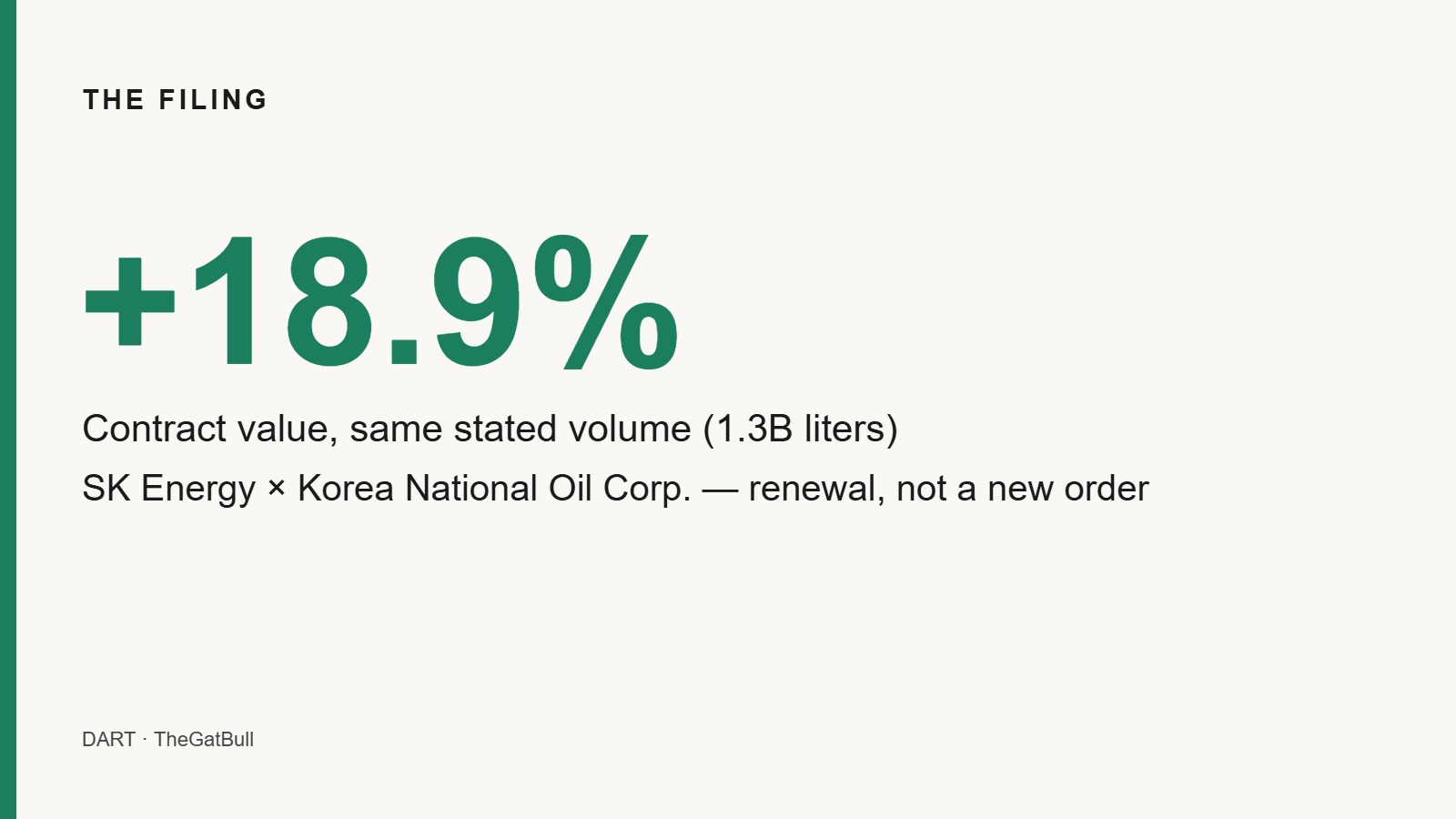
SK Energy’s renewed fuel deal with Korea’s state oil company is ₩2.21 trillion, up 18.9% on the same stated 1.3 billion liters. What it shows.